









Is Nicotine Really Harmful to Your Body? The Truth Behind the Biggest Nicotine Myth
2026-05-22
Introduction: The Most Misunderstood Chemical in Tobacco
Walk into any health forum, social media comment section, or casual conversation about smoking and vaping, and you will hear the same statement repeatedly: “Nicotine is terrible for you. It causes cancer and destroys your lungs.”
But what if everything you believe about nicotine is partially wrong?
In recent years, a massive amount of scientific research has reshaped our understanding of nicotine. Public confusion has reached an all-time high thanks to conflicting viral posts, vape industry marketing, and outdated health education. Millions of people now believe two extreme falsehoods: either nicotine is a deadly poison that instantly causes cancer, or nicotine is completely harmless and only a “relaxing habit.”
The truth lies strictly in the middle.
Nicotine is not the deadly cancer-causing toxin in cigarette smoke. However, it is far from harmless. It is a powerful psychoactive substance with unique short-term and long-term physiological effects that impact your brain, heart, hormones, and developing body systems.
In this in-depth, science-based guide, we break down exactly whether nicotine is harmful to your body, debunk the most common nicotine myths, compare nicotine versus cigarette smoke damage, and explain who faces the highest health risks from nicotine exposure.
What Exactly Is Nicotine, Scientifically?
Before evaluating harm, it is critical to understand what nicotine is. Nicotine is a naturally occurring alkaloid produced primarily by the tobacco plant. It exists in small concentrations in tomatoes, potatoes, and eggplants, but in negligible, non-impactful doses for humans.
Functionally, nicotine is a stimulant and cholinergic agonist. It binds to nicotinic acetylcholine receptors in the human brain and nervous system, triggering rapid chemical reactions that boost focus, alertness, and mood while reducing stress and appetite.
This unique mechanism is why people crave nicotine daily. It delivers instant mental benefits—but these benefits come with biological tradeoffs.
Crucial Scientific Fact: Major global health bodies including the IARC (International Agency for Research on Cancer) and the U.S. Surgeon General do not classify nicotine as a carcinogen on its own.
Myth 1: Nicotine Causes Cancer and Lung Damage
This is the single biggest misconception dominating public health discussions.
Almost all fatal diseases linked to smoking—lung cancer, COPD, emphysema, throat cancer, and chronic bronchitis—are caused by tar, carbon monoxide, heavy metals, and over 7,000 toxic chemicals in combustible tobacco smoke, not nicotine itself.
The UK’s Royal College of Physicians and official FDA statements confirm this critical distinction: Nicotine is the addictive agent in tobacco products, but it is not the lethal agent. The massive mortality rate associated with smoking stems entirely from smoke combustion toxins, not nicotine.
This explains why nicotine replacement therapies (NRTs) like nicotine gum, patches, and lozenges have been safely prescribed by doctors for decades to help millions quit smoking. If nicotine caused cancer or severe lung damage, these medical treatments would be banned immediately.
So Is Nicotine Completely Harmless? Absolutely Not.
While nicotine does not cause cancer or destroy lung tissue, dismissing it as “safe” is a dangerous oversimplification. Nicotine carries significant standalone health risks, especially with chronic long-term use, high-dose exposure, and adolescent consumption.
Below are the proven, peer-reviewed harmful effects of pure nicotine on the human body.
1. Extreme Addictiveness (The Core Danger)
The primary harm of nicotine is its powerful addictive potential. The FDA explicitly confirms nicotine is the sole reason people develop lifelong tobacco and vape habits.
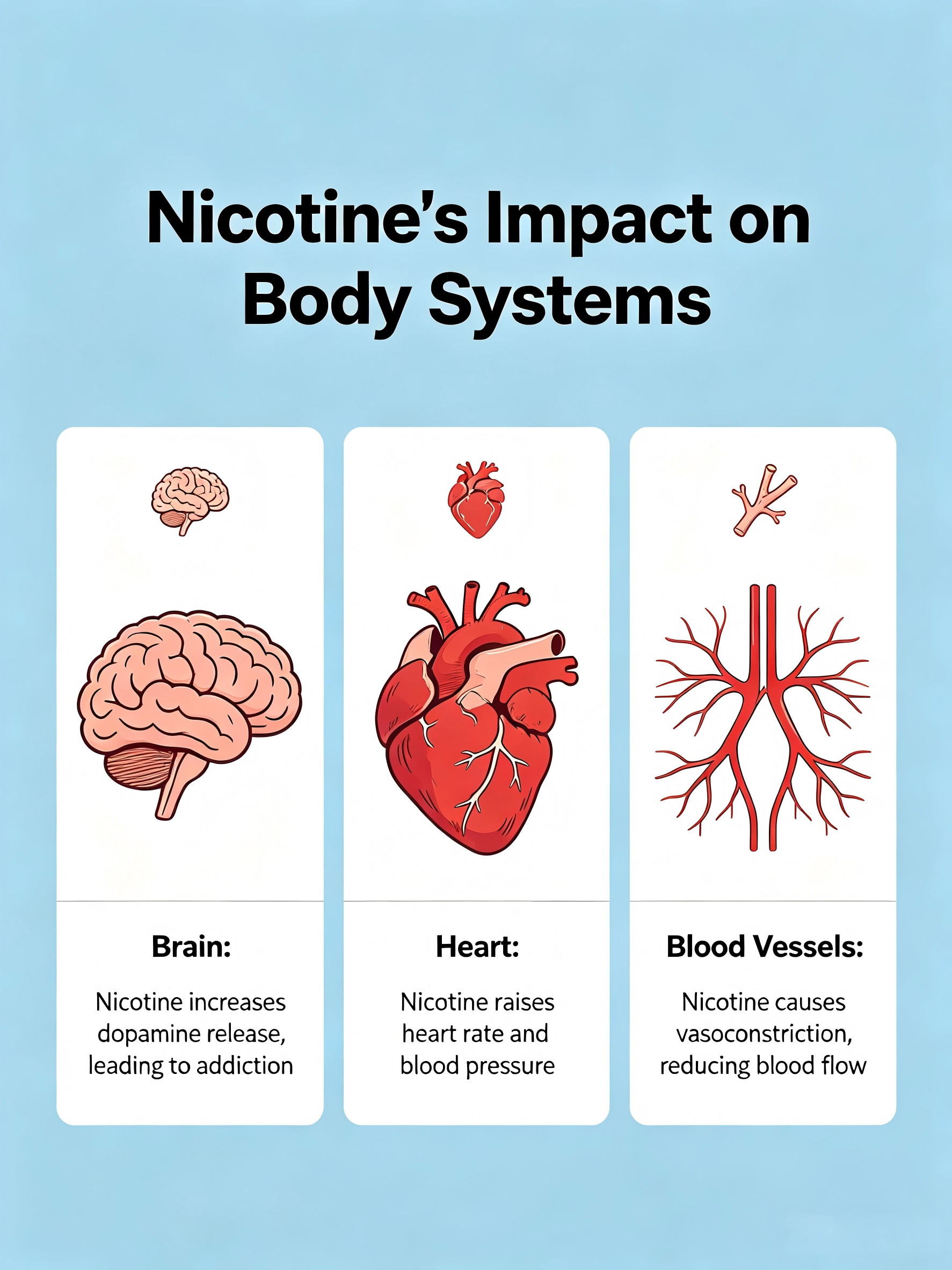
When nicotine enters the bloodstream, it crosses the blood-brain barrier in under 10 seconds, triggering a sharp surge of dopamine. This creates an intense reward response that trains the brain to crave repeated doses.
Over time, tolerance builds. Users need more nicotine to feel normal, leading to dependency, withdrawal symptoms (irritability, anxiety, brain fog, cravings, sleep disruption), and compulsive use.
This addiction is not just behavioral—it rewires brain chemistry permanently, especially in young users.
2. Severe Cardiovascular System Stress
Pure nicotine is a known cardiovascular toxicant. Even without smoke inhalation, regular nicotine exposure raises lifelong heart health risks.
Short-term nicotine effects include elevated heart rate, increased systolic blood pressure, and constricted blood vessels. This forces the heart to work harder with every beat.
Long-term chronic nicotine use is linked to: - Increased risk of hypertension - Coronary artery disease - Higher stroke risk - Peripheral vascular disease
Recent PMC research confirms that standalone nicotine exposure (from vapes or pure nicotine products) independently increases cardiovascular morbidity, even in the absence of tar and smoke toxins.
3. Brain Development Damage in Teenagers & Young Adults
This is one of the most underdiscussed yet devastating nicotine harms. The human brain fully matures at age 25. Before that, nicotine exposure causes permanent developmental impairment.
Adolescent nicotine use disrupts prefrontal cortex development—the brain region responsible for decision-making, impulse control, focus, and emotional regulation.
Studies show young nicotine users face: - Reduced attention span and learning ability - Higher risk of anxiety and mood disorders - Increased likelihood of future substance addiction - Permanent altered dopamine receptor function
For minors, nicotine is never safe, in any dose or form.
4. Reproductive & Fetal Harm
The CDC classifies nicotine as toxic to developing fetuses. Pregnant people who use nicotine products face higher risks of miscarriage, preterm birth, low birth weight, and neonatal developmental issues.
Nicotine crosses the placenta and disrupts fetal brain and lung development, leading to long-term childhood health and behavioral challenges.
5. Immune System & Bodily Function Disruption
Chronic nicotine exposure suppresses immune system function, making users more susceptible to respiratory infections, inflammation, and slow tissue healing. It also impacts bone density over time, increasing fracture risk and delaying recovery from injuries.
Nicotine Poisoning: The Acute Overdose Risk
Many people overlook acute nicotine toxicity. The estimated lethal adult dose of pure nicotine is approximately 60mg. While this is difficult to reach through standard smoking, high-dose vape concentrates, pure nicotine liquids, and accidental ingestion (especially in children) cause severe poisoning cases annually.
Symptoms of nicotine overdose include severe nausea, vomiting, tremors, confusion, seizures, and in extreme cases, respiratory paralysis and death.
Vaping vs. Smoking: Is Nicotine Vaping Safer?
This is one of the most searched nicotine-related questions worldwide. Here is the unbiased scientific answer:
Vaping nicotine is significantly less harmful than smoking combustible cigarettes—but it is not safe.
Cigarette smoke contains thousands of carcinogenic and toxic combustion byproducts that destroy organs and cause terminal cancer. Vaping eliminates combustion, removing most lethal toxins. This is why vaping is widely recognized as an effective smoking cessation tool for adult smokers.
However, vape-delivered nicotine still carries all the standalone risks: addiction, heart strain, neurological impacts, and hormonal disruption. Vaping is a harm reduction tool for smokers, not a recreational safe product for non-smokers.
The Good Side of Nicotine (Why It’s Not All Negative)
To fully answer “is nicotine harmful,” we must cover emerging research on nicotine’s potential therapeutic benefits when used in controlled, medical settings.
Clinical studies show that regulated, low-dose nicotine may offer neuroprotective effects and symptom relief for certain neurological conditions, including Parkinson’s disease, Alzheimer’s, and ADHD. Nicotine’s ability to boost focus and cognitive function also supports its use in prescription medical treatments for specific patient groups.
Important Caveat: These benefits apply only to supervised medical administration, not recreational daily nicotine use via smoking or vaping.
FAQs: Top Nicotine Health Questions Answered
1. Does nicotine cause cancer?
No. Nicotine itself is not a carcinogen. All tobacco-related cancers come from smoke toxins, tar, and combustion chemicals.
2. Is occasional nicotine use harmful?
Infrequent, low-dose nicotine use causes minimal long-term harm for healthy adults. However, it carries immediate addiction risk, which leads to chronic harmful usage over time.
3. Is nicotine worse for you than caffeine?
Yes. Nicotine is far more addictive and creates stronger cardiovascular and neurological changes than caffeine, despite both being stimulants.
4. Can your body recover from nicotine damage?
Yes. Most cardiovascular and circulatory improvements occur within weeks of quitting nicotine. Brain chemistry and function gradually recover long-term, though adolescent developmental changes may be permanent.
Final Verdict: Is Nicotine Really Harmful to Your Body?
After reviewing global clinical research, the final answer is clear and balanced:
Nicotine is not a cancer-causing lethal toxin like cigarette smoke, but it is absolutely harmful when used recreationally and long-term.
It is not the enemy people think it is—but it is not safe either.
Nicotine’s true danger lies in its addictive power, cardiovascular strain, developmental brain damage in youth, and systemic physiological stress. It turns a one-time habit into a lifelong dependency that exposes users to far more dangerous tobacco and vape-related harms.
For adult smokers, switching to pure nicotine replacement therapies reduces massive health risks. For non-smokers, especially teenagers, there is zero benefit to nicotine exposure—and plenty of potential harm.